Behaviour
Our Approach to Behaviour
Promoting Positive Attitudes
At Crawley Ridge Infant School, we understand “behaviour” to encompass attitudes to learning, managing responses to emotions as well as personal conduct. For our Behaviour Policy, go to Policies.
Our Behaviour Strategy is intended to promote a feeling of community, co-operation and collective responsibility and is centred around the 3 simple principles (rules) of being
- Ready (to learn)
- Respectful (of other children and adults)
- Safe
Each class has a tree display, with a leaf representing each child. Children are encouraged to help their class tree flourish.
When children consistently demonstrate positive behaviour and the class maintains the three expectations, teachers may award a class reward. Once 25 rewards have been earned, the class receives a class treat, such as extra playtime or a special activity.
Individual children may receive a Golden Acorn Card when they show particular effort in their attitude to learning or in the way they treat others. Staff explain why the behaviour is being celebrated, linking it back to Ready, Respectful and Safe.
Three Golden Acorn Cards may lead to a Golden Leaf being displayed on the whole-school tree in the hall. Each week, the Golden Acorn Trophy is awarded to the class showing outstanding effort or consistently positive behaviour.
When behaviour is not appropriate
Where behaviour is not appropriate, staff give a private verbal reminder and support the child to reflect on what has happened and how they can get back on track. Where appropriate, a consequence may be applied, such as missing five minutes of playtime. Children are helped to understand why their behaviour was not appropriate, with reference to our three expectations.
Staff keep records of behaviour and progress, which are monitored by the Headteacher and senior leaders.
When further support is needed
If a child continues to struggle to manage their emotions and behaviour despite the support provided, additional support will be considered. Our Inclusion Lead will help identify next steps and an appropriate intervention programme, working with parents where needed. Support from outside agencies may also be considered.
Behavioural Approaches
Emotion Coaching:
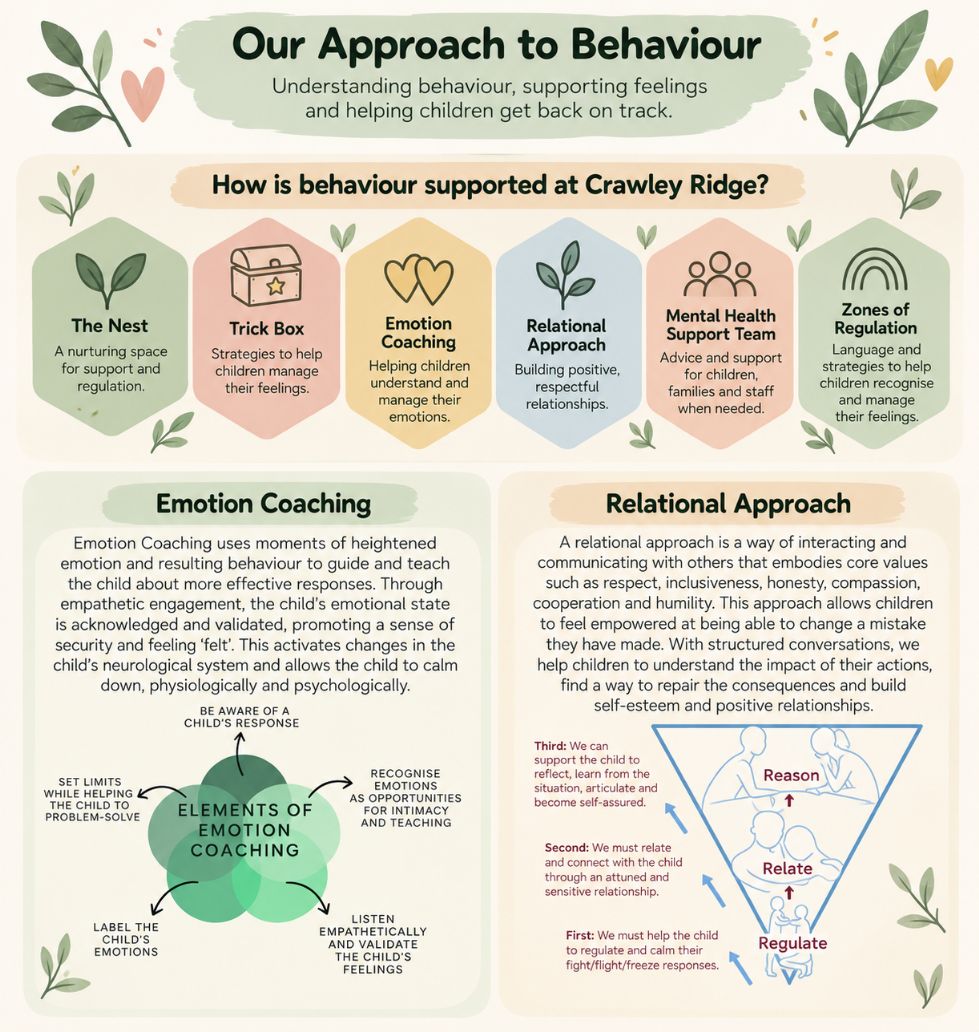
Emotion Coaching uses moments of heightened emotion and resulting behaviour to guide and teach the child and young person about more effective responses. Through empathetic engagement, the child's emotional state is verbally acknowledged and validated, promoting a sense of security and feeling 'felt'. This activates changes in the child's neurological system and allows the child to calm down, physiologically and psychologically.
Source: www.emotioncoachinguk.com
Restorative Approach:
Sometimes situations occur between individuals or groups of people. At Crawley Ridge, we use Restorative Approaches to support people. A restorative approach is a way of working with conflict that puts the focus on repairing the harm that has been done. It asks all parties to share what their involvement was, how the incident of conflict has affected them and to agree what needs to be done for things to be put right.
Zones of Regulation
We use Zones of Regulation to help children recognise and understand their emotions and levels of alertness. Children learn that all feelings are okay and that we can experience different feelings throughout the day. The Zones give children a shared language to describe how they are feeling and help them identify strategies that can support them to feel calm, regulated and ready to learn.
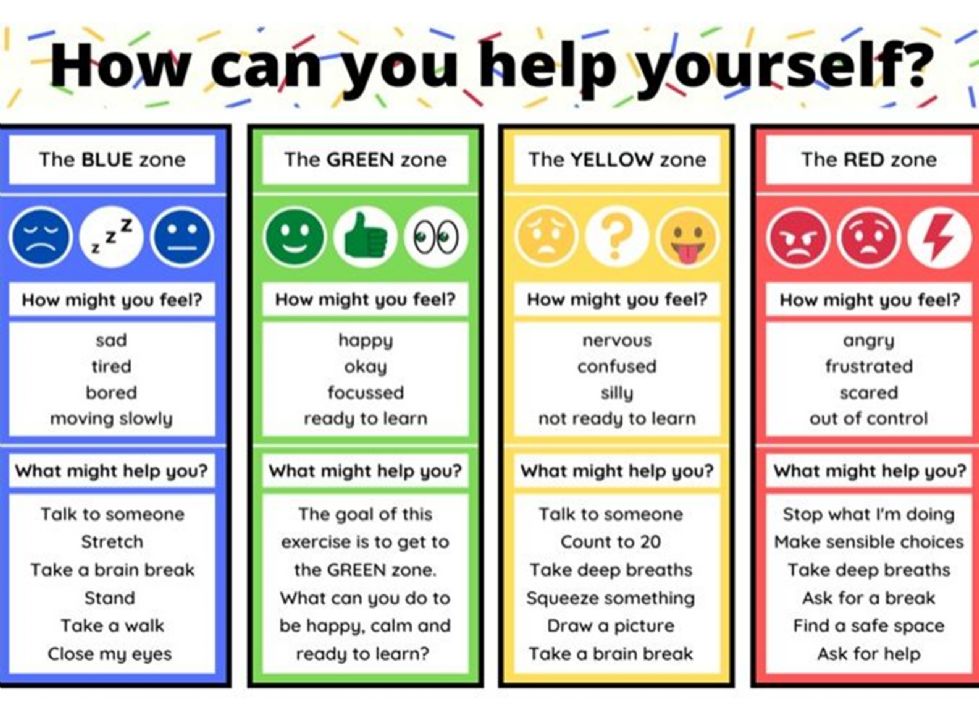
See our reflection booklet below, which supports these conversations with children and can also be used at home.